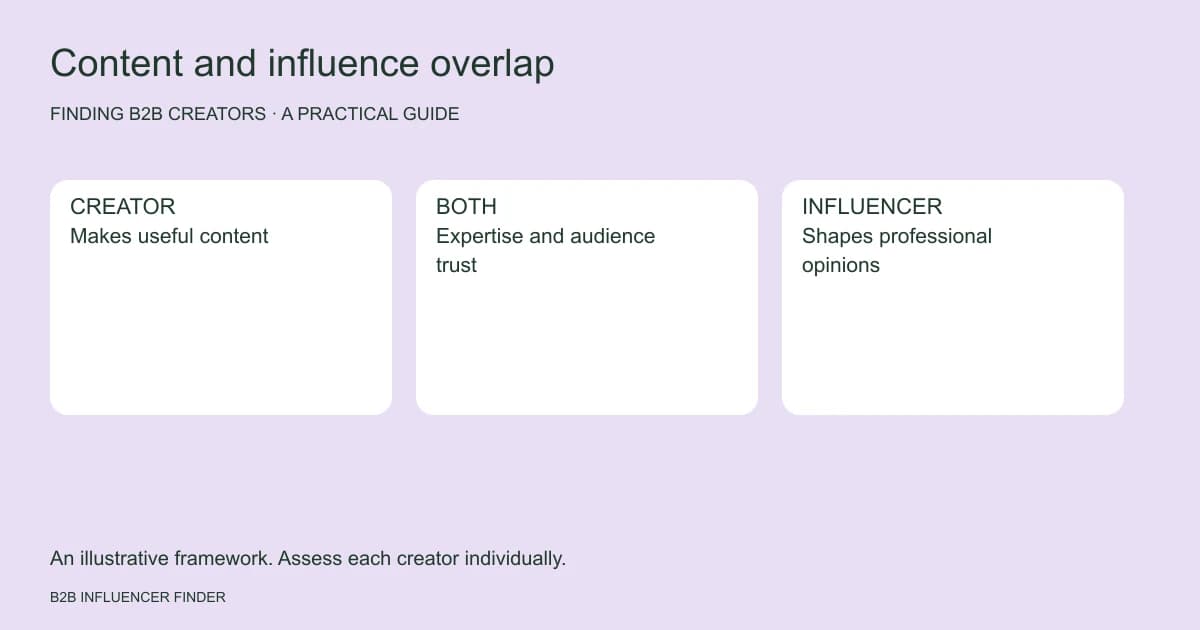
In B2B marketing, 'creator' and 'influencer' are often two labels for the same person. The useful difference is emphasis: a creator is usually valued for the content and expertise they produce, while an influencer is valued for their ability to shape what an audience notices, believes or does.
In practice, the best B2B people are often both.
A cybersecurity practitioner who publishes a respected newsletter is a creator. If security leaders trust her recommendations, she also has influence. A finance YouTuber who explains software to CFOs creates content and influences buying conversations. Calling one a creator and the other an influencer does not change much about how you should evaluate them.
So i would not build two separate databases. I would understand the distinction, then search for credible people who have the right expertise, audience and content fit.
What is a B2B creator?
A B2B creator is someone who regularly makes content for a professional audience. That could be LinkedIn posts, YouTube videos, a newsletter, a podcast, articles, research, webinars or a mix of formats.
The defining thing is the work they publish. They may be a full-time creator, but many B2B creators are operators, consultants, founders, analysts, researchers or executives who create alongside their main job.
That matters because B2B expertise often comes before creator identity. The person your buyers trust may never describe themselves as a creator.
What is a B2B influencer?
A B2B influencer is someone whose expertise, reputation or audience gives them the ability to influence professional opinions or decisions.
They do not need celebrity-scale reach. Influence can be extremely concentrated. A person followed by 6,000 revenue operations leaders may have more commercial relevance to a RevOps platform than a broad business personality followed by 300,000 people.
LinkedIn itself describes B2B influencer marketing as partnering with established voices in an industry to co-create or amplify content with added credibility and reach. That definition is useful because it puts credibility alongside reach.Sources: LinkedIn Marketing Solutions - B2B Marketing
So what is the actual difference?
Creator describes what someone does. Influencer describes the effect they can have.
That is the cleanest distinction i have found.
A creator makes useful media. An influencer affects an audience. Some creators have little influence. Some influential industry people barely create content. The people most interesting for B2B creator partnerships usually sit in the overlap.
Why the terms get messy in B2B
The consumer creator economy trained marketers to think in neat categories: influencer, celebrity, creator, affiliate. B2B is less tidy.
A respected SaaS founder might publish twice a week and host a podcast. An analyst might have a newsletter and 20,000 LinkedIn followers. A consultant might run a small YouTube channel that is watched by exactly the people who buy your category.
Are they creators? Yes. Are they influencers? If people pay attention to what they say, also yes.
This is why arguing too hard about the terminology can become a distraction.
Creator is often the better word when content is the job
If your brief is mainly about making something, 'creator' is usually the more useful framing.
You might want someone to turn your research into a LinkedIn article, explain your product category on YouTube, interview your founder, discuss a case study in a newsletter or create a tutorial.
Here, you are buying expertise plus the ability to make good content. Distribution matters, but the quality of the output is central.
Influencer is often the better word when audience impact is the job
If the primary value is that a trusted person can introduce an idea to a relevant audience, 'influencer' can be the clearer word.
Maybe you want a respected operator to discuss a new category. Maybe you want industry voices to validate research. Maybe the objective is awareness among a narrow group of buyers.
Here, the relationship between the person and their audience becomes especially important.
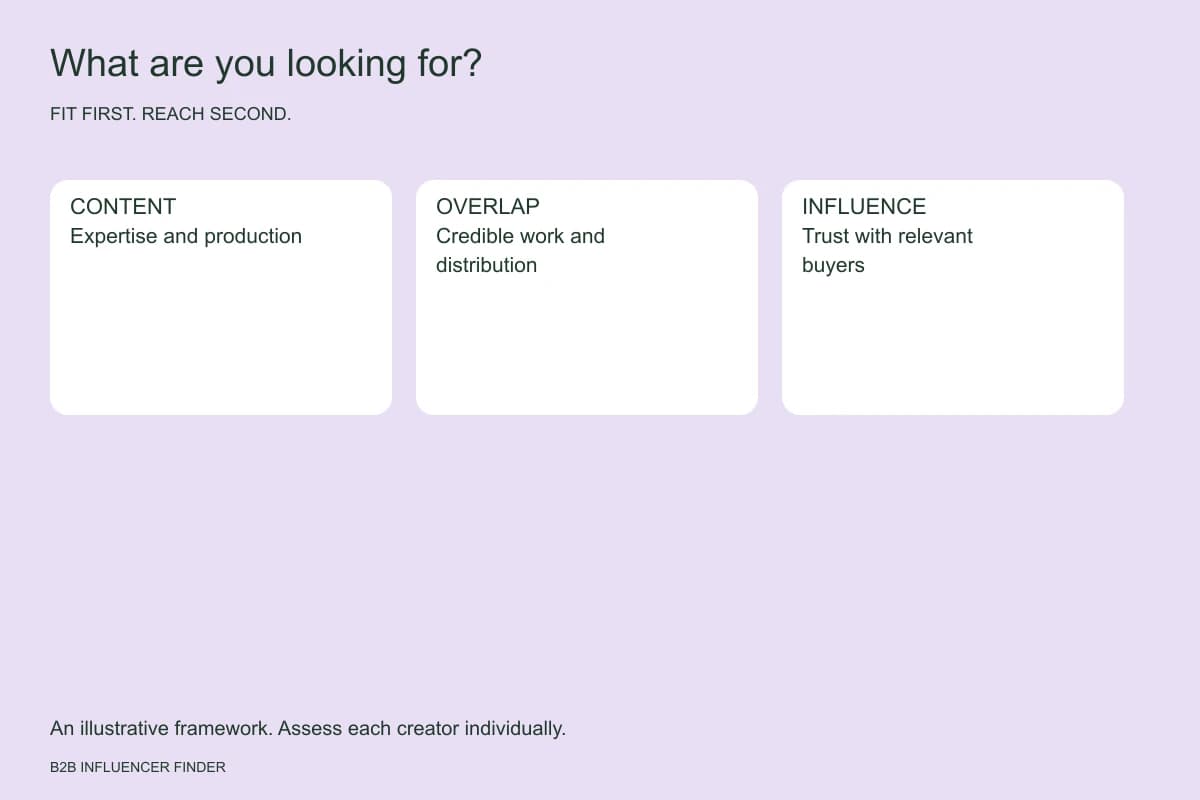
B2B brands usually need both content and influence
This is the reason i would not choose a creator strategy or an influencer strategy as if they are opposites.
A creator with beautiful content but no relevant audience may give you a useful asset but limited distribution. An influential person with the right audience but weak content may create attention without much depth.
The strongest partnership gives you both: credible content and credible distribution.
LinkedIn and Ipsos reported in their 2025 B2B Marketing Benchmark that 71% of marketers said a recommendation from a B2B influencer or creator who is a subject-matter expert is influential in building a successful brand. Notice the wording. Even the research groups influencers and creators together, then makes subject expertise the important qualifier.Sources: LinkedIn + Ipsos - 2025 B2B Marketing Benchmark: Trust Is the New KPI
Thought leaders are part of this conversation too
B2B adds another label: thought leader.
A thought leader is generally someone recognized for ideas or expertise in a field. They may be a creator. They may be an influencer. They may be both.
I would treat thought leadership as a credibility position rather than a content format. Calling yourself a thought leader does not make you one. Other people paying attention to your ideas is the evidence.
What should you search for?
Search for expertise before titles.Further reading: How Do I Find B2B Influencers in My Industry?
If you sell fraud software, search for people repeatedly discussing fraud prevention, payments risk, identity, banking operations and adjacent buyer problems. If you sell HR software, search the questions HR leaders actually debate.
Do not restrict discovery to profiles containing 'creator' or 'influencer'. You will miss many of the best B2B voices.
Look across LinkedIn, YouTube, newsletters, podcasts, blogs and industry communities. Search the subject. Then identify the people who keep appearing with something useful to say.
How should you evaluate them?
Whether someone calls themselves a creator, influencer, expert or operator, the evaluation is almost identical.Further reading: What Makes a Good B2B Influencer for Your Brand?
Start with topic fit. Do they actually cover the subject you care about?
Then buyer fit. Is there evidence the people paying attention overlap with your market?
Then credibility. Why would someone trust this person on the topic?
Then content quality and activity. Do they make useful work and are they still publishing?
Then collaboration fit. Does your company have something genuinely useful to contribute to what they already talk about?
Reach comes after those questions, not before them.
What about follower count?
Follower count does not decide whether someone is a creator or influencer, and it does not tell you whether they are useful for your brand.Further reading: How Many Followers Should a B2B Influencer Have?
A small specialist audience can contain a high concentration of buyers. A huge audience can contain almost none.
Use audience size to estimate potential reach. Do not use it as a substitute for relevance or credibility.
Which term should your B2B brand use?
Use the term your market understands, and do not overthink it.
'Creator' often feels more collaborative and content-led. 'Influencer' makes the distribution and persuasion element more explicit. In B2B, 'industry expert', 'practitioner' or 'thought leader' may sometimes describe the person more naturally.
Our product is called B2B Influencer Finder because people actively search for B2B influencers and influencer discovery. Inside the actual matching process, though, we are looking for a much broader set of credible B2B voices: creators, operators, analysts, newsletter writers, YouTubers, podcast hosts and subject-matter experts.Further reading: See how creator matching works
For Creator AEO, the label matters even less
If part of your goal is to create third-party evidence around your brand, what matters is what gets published and where, not whether the author calls themselves an influencer.Further reading: What Is Creator AEO?
A useful article from a niche expert, a detailed YouTube discussion, a public newsletter post or a podcast transcript can all add external context around your company and the topics it is associated with.
There is no credible evidence that AI search systems care about the marketing label attached to the author. The useful question is whether credible, relevant, public content exists.
The simplest way to think about it
A B2B creator makes content. A B2B influencer has influence. The people you probably want can do both.
Find the people already teaching, explaining and debating the problems your buyers care about. Check whether the right audience pays attention. Then work out whether your company has something useful to add to their next piece of content.
That is a better creator strategy than deciding whether someone belongs in the creator column or the influencer column.
Sources
LinkedIn Marketing Solutions - B2B MarketingSources: LinkedIn Marketing Solutions - B2B Marketing
LinkedIn + Ipsos - 2025 B2B Marketing Benchmark: Trust Is the New KPISources: LinkedIn + Ipsos - 2025 B2B Marketing Benchmark: Trust Is the New KPI